

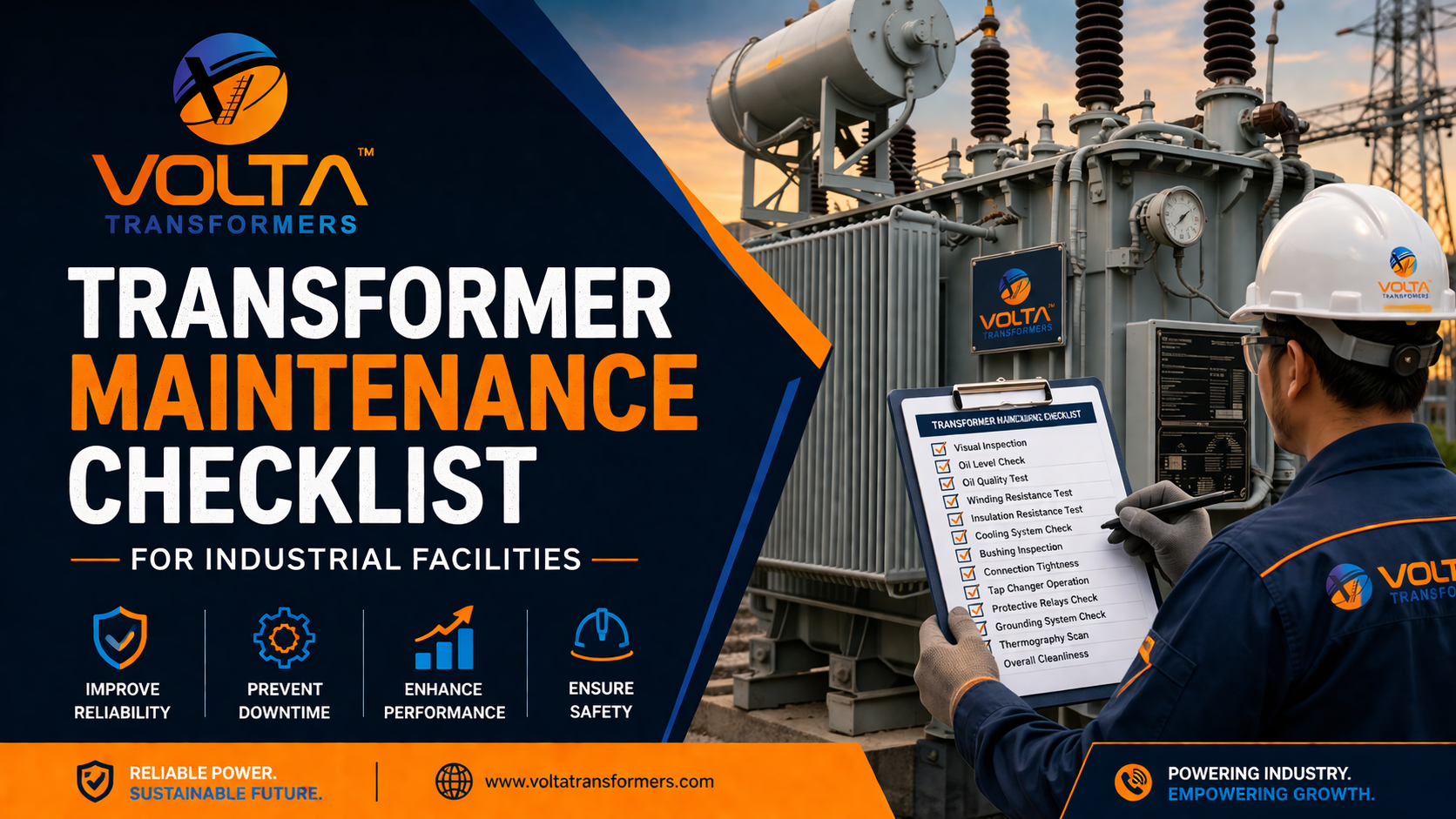
Quality transformers are very important for an efficient and safe power distribution in an industrial facility. They control the voltage levels of electric current and provide electric power to different machines, equipment and production systems. However, like all electrical devices, transformers can benefit from regular checks and servicing to be maintained for efficiency and avoid unpredicted failures.
Developing and implementing a transformer maintenance checklist for regular monitoring allows industrial facilities to identify possible problems, minimize downtime and increase the life of transformers. Regular maintenance is also important for operational safety & that the transformer works efficiently under heavy industrial loads.
Implementing a systematic maintenance plan and investing in high-grade volta transformers, for example, will help the industries stay on top of their power systems instead of suffering from severe disruptions which comes with hefty costs. This article will detail a hands-on maintenance checklist for transformers suitable for industrial applications.
Why Transformer Maintenance Is Important
In industrial environments, transformers work round the clock since electrical demand is typically high. Transformer performance can be gradually diminished by issues such as overheating, insulation degradation and oil contamination all of which generate significant risks when not inspected regularly.
Regular inspection of key components on a transformer maintenance checklist helps prevent large electrical failures. Well-functioning machines can also help to minimize energy losses, enhance reliability, and preserve safe operating conditions.
In order industries which maintain their transformers regularly, have reduced system failure and lower long term maintenance costs.
Visual Inspection of Transformer Components
Routine maintenance of transformers usually begins with a physical inspection. It helps to detect visible signs of damage, leaks or overheating.
Technicians should look for as part of visual inspections:
- Oil leakages in the vicinity of transformer tanks or fittings
- Damaged bushings or connectors
- Signs of overheating or discoloration
- Loose electrical connections
- Abnormal noise or vibration
Routine visual inspections enable issues to be identified before they become major operational failures.
Check Transformer Oil Condition
Transformer oil is vital for insulation and cooling. Oil can break down over time owing to contamination, moisture or oxidation.
Oil condition testing is a must on a transformer maintenance checklist to ensure proper performance of insulation properties.
Common oil tests include:
- Dielectric strength test
- Moisture content analysis
- Dissolved gas analysis (DGA)
- Oil acidity testing
These tests identify whether the oil needs to be filtered, treated, or replaced altogether.
Inspect Cooling Systems
Well, transformers require enough cooling to maintain their efficiency and avoid heat-building problems. Operating Industrial transformers produce heat, and cooling systems effectively remove this heat.
Technicians should inspect:
- Radiators and cooling fins
- Cooling fans and pumps
- Oil circulation systems
- Air ventilation pathways
Maintaining the correct operation of cooling components ensures safe operating temperatures and great transformer operation.
Monitor Transformer Load Conditions
If transformers run over their capacity, they may not cool themselves properly and suffer losses.
Tracking load conditions is critical in the transformer maintenance checklist since it helps avoid overloading of transformers that can cause damage to windings and insulation systems of transformers.
Load monitoring involves:
- Measuring operating current and voltage
- Checking load balance across phases
- Identifying prolonged overload conditions
Transformer reliability and operational stability can be ensured by maintaining proper loading conditions.
Test Insulation Resistance
Transformer insulation systems are used to avoid leakage of electricity and short circuits of internal components. Insulation materials can deteriorate due to heat, moisture or aging over the years.
One method that assists in accessing the condition of transformer insulation is Insulation resistance testing.
Early detection of possible insulation breaks is done through insulation resistance test which technicians use specialized equipment to perform.
Insulation testing at regular intervals confirms that insulating elements within the transformer remain functioning properly to prevent failure of a live component.
Check Electrical Connections and Terminals
Loose or damaged electric connections, an outcome of harsh conditions in industrial transformers can lead to overheating and voltage fluctuations.
Maintenance teams should inspect:
- Terminal connections
- Busbar connections
- Grounding systems
- Cable terminations
Regularly tightening and securing electrical connections ensures that power flows optimally.
Maintain Transformer Protection Systems
Normally, Transformers have protection systems for detecting abnormal operating conditions.
These protection systems may include:
- Temperature monitoring devices
- Buchholz relays
- Pressure relief devices
- Overcurrent protection systems
It becomes a crucial aspect of transformer maintenance to ensure these safety systems are working instantly.
Maintain Proper Cleaning and Environmental Conditions
Transformers are frequently found in industrial contexts where they can be subject to dust, moisture and chemical contamination. These environmental factors can impact transformer performance throughout the decades.
Cleaning prevents dust and debris buildup on the components of transformers. Preventative measures, like maintaining adequate ventilation and ensuring dry operational conditions for the transformers, are both crucial to protecting transformer insulation systems.
Regardless, environmental control must be an integral part of any good transformer maintenance checklist.
Conclusion
The Need for Regular Transformer Maintenance in Industrial Facilities Structured maintenance routines assist in identifying issues earlier, minimizing downtime and extending transformer operational life.
The major activities performed in maintenance includes Visual reading, testing oil, checking insulation, load test of circuit supervision of cooling system and verifying electrical connections. Comprehensive transformer maintenance checklist accomplishes safe and efficient operation for transformers even at hostile industrial environment conditions.
By utilizing routine maintenance with high-quality equipment, industrial facilities can keep electrical systems stable, which improves energy efficiency and prevents costly power interruptions.

Leave a Comment