

Introduction
These plants rely on their electrical system to operate smoothly and cut down operational costs. Transformers play a pivotal role in these systems by ensuring voltage levels are appropriate for the different types of equipment and machinery needing electrical power. However, as transformers convert electricity into usable energy, some of that energy is naturally lost during the operation of the transformer.
Improving the performance of power systems requires implementing effective strategies for transformer losses reduction industrial plants. Minimizing transformer losses can help businesses save on energy costs, enhance equipment reliability, and increase electrical infrastructure longevity. The potential impact of the aforementioned factors on transformer performance and energy loss has been well-documented in published literature, indicating that appropriate choice of transformer rating, effective maintenance practices, and fine-tuned operating conditions can mitigate the amount of energy wasted within industrial settings.
This article discusses how industrial facilities can maximize transformer efficiency, and minimize losses within their power distribution systems.
Understanding Transformer Losses in Industrial Systems
So to solve the transformer loss let’s first understand how does it occur? Transformer losses are mainly classified into two major types: core loss and copper loss.
These core losses are also called no-load losses which happen due to the magnetization of the transformer core while ECG applied, even if there is no load connected. Copper losses, in contrast, are causing when current flows during transformer winding operations.
Both loss types mean wasted energy and high operational costs. Strategies for reducing losses that can be employed in industrial plants transformer operation include minimizing line losses, improving equipment design and optimizing transformers.
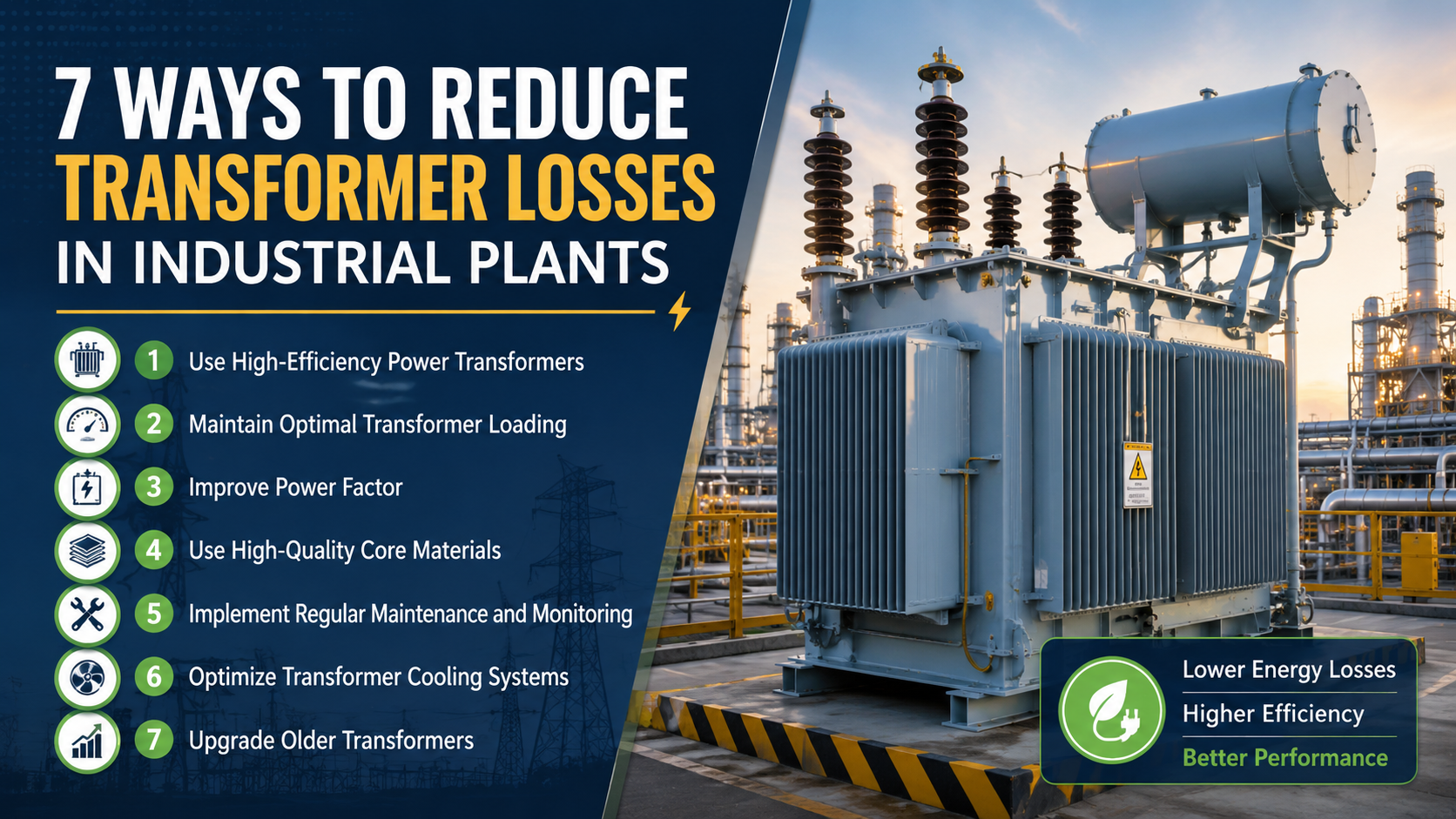
1. Use High-Efficiency Power Transformers
One of the better ways to mitigate transformer losses is using high efficiency transformers with updated materials and modified winding structures.
The transformers of today are designed for best core and copper losses and perform stably against heavy industrial loads. If you need to upgrade your electrical infrastructure, we recommend investing in high-performance power transformers designed for industrial production.
Power generation is an energy-intensive process and high-quality transformers minimize wastage of this precious commodity thereby enhancing the long-term operational efficiency.
2. Maintain Optimal Transformer Loading
This is because transformers are only optimally efficient in a limited range of loads. Using a transformer well beyond its operation rating can lead to losses and lower efficiency.
As loading increases, so do copper losses from current flow, but in turn at very low loading levels it leads to inefficient operation as core losses remain constant.
Transformer losses reduction in industrial plants can already be done by maintaining balanced and optimal loading conditions, among other methods to keep the transformer operating within its ideal parameters.
3. Improve Power Factor
Bad power factor is a typical problem in most commercial complexes. A low power factor requires more current drawn by the electrical system to provide the same amount of power.
This added current raises copper losses in transformers and other electricity equipment.
Industries can enhance power factor by:
- Capacitor banks
- Automatic power factor correction systems
- Reactive power compensation equipment
Thus, power factor is improved and also avoids unnecessary current flow through transformer improving its efficiency.
4. Use High-Quality Core Materials
The energy efficiency is heavily influenced by the material of transformer core. However, hysteresis and eddy current losses are considerably reduced due to the use of high-grade silicon steel or amorphous metal cores.
Modern transformer designs employ better core laminations and magnetic materials to reduce these losses. Transformer losses can be significantly reduced through the selection of transformers constructed with state-of-the-art core technology, which leads to an overall system efficiency improvement in industrial plants.
5. Implement Regular Maintenance and Monitoring
To ensure optimum functioning of transformers regular inspection and maintenance is required. Poor maintenance may cause insulation to degrade, leading to overheating and increased electrical resistance.
Industrial plants must use preventive maintenance practices such as:
- Transformer oil testing
- Thermal inspections
- Load monitoring
- Cooling system checks
- Insulation resistance testing
Regular monitoring allows early identification of potential issues before they can lead to higher energy losses in the long term.
6. Optimize Transformer Cooling Systems
Review Report on Effects of Transformer Temperature As transformer windings increase in temperature, resistance is introduced which creates greater copper losses.
Cooling SystemsCooling systems are essential for maintain stable operating temperatures whilst improving transformer efficiency.
Common transformer cooling methods include:
- ONTAP Oil Natural Air Natural (ONAN) cooling
- Oil Forced Air Forced (OFAF) cooling
- Radiator cooling systems
Preventing losses in transformers: The key to doing this is making sure the transformers are properly cooled, particularly at industrial locations.
7. Upgrade Older Transformers
Most industrial plants still run their obsolete transformers when the design state-of-the-art was old technology. Such transformers tend to have poor efficiency and worse core losses than modern designs.
Replacing with modern transformers that have a superior insulation system and absorb less energy can result in significant operational losses.
The industrial plants are the areas where transformer losses reduction in industrial plants can make a major difference.
Conclusion
Transformer losses are always a part of any electrical power system; however, they can be kept minimized using good design principles and by operating the transformer within its technical limits. Energy-efficient industrial plants can enhance electrical system performance and lower operating costs.
Load optimization, power factor improvement, high-efficiency transformer choice and periodic maintenance are some of the strategies to minimize energy losses. Moreover, retrofitting older equipment and optimizing cooling systems also increases the efficiency of transformers.
Training yourself on reducing transformer losses in industrial plants will definitely assist in improving either energy professionalism and reliability, together with long-term usage included in the electrical infrastructure.

Leave a Comment