- +91 72280 10925
- [email protected]
- 148,133, Aatmiya 2 Industrial Park, Nh 48, Bamangam, Vadodara
For businesses in India, electricity is more than just a monthly expense. It keeps machines running, employees productive, products moving, and customers served. Whether you operate a manufacturing unit, a retail store, an office, a warehouse, or a commercial facility, a reliable power supply is essential for smooth business operations.
At the same time, rising electricity expenses and the need for dependable backup are encouraging businesses to explore smarter energy solutions. Solar power is one option, but what happens when solar generation falls or the grid supply is interrupted? This is where a hybrid solar inverter for business can be useful.
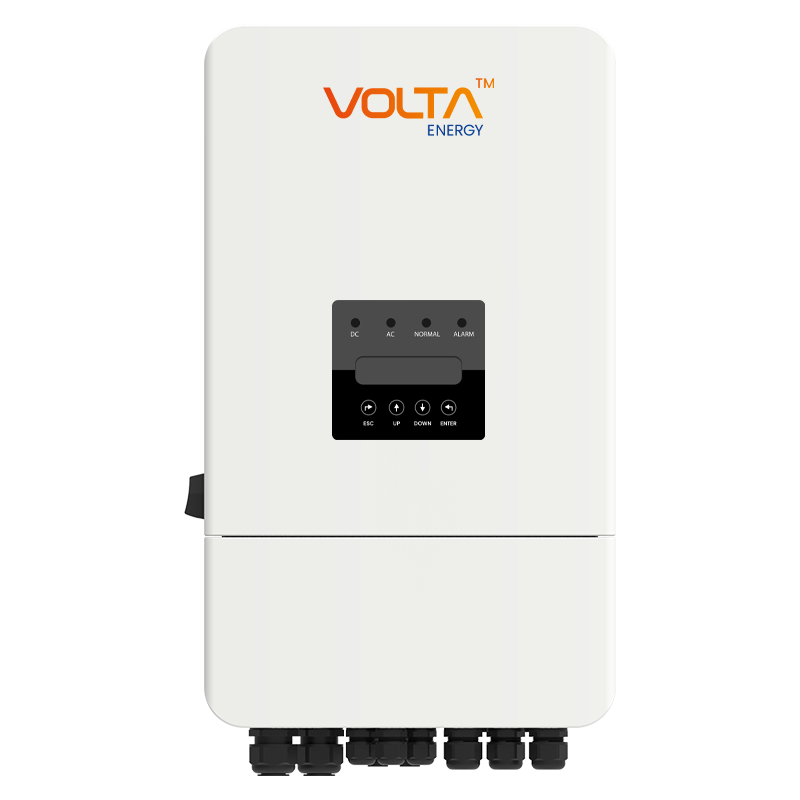
A hybrid inverter combines solar power management with battery storage and grid integration, helping businesses use available solar energy more effectively while providing backup when the system is properly designed for it.
But with so many models, capacities, battery options, and features available in India, choosing the right hybrid inverter can feel confusing. The best option is not necessarily the most expensive model or the one with the highest advertised efficiency. It is the inverter that matches your business’s power requirements, operating hours, backup needs, and budget.
In this guide, we explain how hybrid inverters work, what features to look for, and how to choose a suitable solution for your business.
A hybrid solar inverter is a power conversion and management device that coordinates electricity from solar panels, batteries, and the utility grid. Unlike a conventional grid-tied solar inverter, which primarily converts solar electricity for use by connected loads or export to the grid, a hybrid inverter can also manage battery charging and discharging. Depending on its design, it may provide backup power during a grid outage.
For example, imagine a small manufacturing unit that operates during the day and uses solar panels to reduce its dependence on grid electricity. When solar generation exceeds the immediate demand, the hybrid system may charge its battery. If the grid supply fails later, the inverter can use the stored energy to power designated backup loads, provided the battery has sufficient charge and the system supports this operation.
This arrangement gives businesses more flexibility in how they generate, store, and use electricity. A typical hybrid solar power system includes:
Solar panels to generate electricity from sunlight.
A hybrid inverter to manage solar generation, conversion, and energy flow.
A compatible battery system to store electricity for later use.
Grid connectivity, where supported and permitted.
Electrical protection, monitoring, and distribution equipment.
The exact configuration depends on the application, local regulations, and the inverter’s technical specifications.
Indian businesses operate under different conditions. A small office may need backup for computers and networking equipment, while a factory may want to reduce daytime electricity consumption and protect selected essential loads during outages. A hybrid inverter can help address several of these requirements.
1. Better Use of Solar Energy
Solar panels generate electricity during daylight hours, but the timing of solar production does not always match a business’s energy consumption. With a compatible battery, surplus solar energy can be stored and used later instead of being limited to immediate consumption or grid export. The financial benefit depends on the system configuration, battery losses, applicable tariffs, and export rules.
2. Backup Power for Essential Equipment
Power interruptions can affect office systems, lighting, security equipment, communication devices, and selected production processes. A hybrid inverter with backup functionality can supply designated loads during an outage. However, backup performance depends on inverter capacity, battery capacity, surge capability, and the type of connected equipment. For machinery requiring high starting current, the system must be designed accordingly.
3. Greater Control Over Energy Consumption
Depending on the available operating modes, a hybrid inverter can prioritise solar power, battery charging, battery discharge, or grid supply. This flexibility allows businesses to configure energy use around their operating schedule and electricity costs.
4. Support for Lower Electricity Expenses
Using solar electricity directly can reduce the amount of power purchased from the grid. Battery storage may provide additional benefits where electricity tariffs, demand charges, or time-of-use rates make stored energy economically useful. However, batteries add to the system cost. Businesses should evaluate the expected savings against the total investment rather than assuming that every hybrid system will automatically deliver a faster payback.
5. A More Flexible Energy System
A well-planned hybrid installation can bring solar generation, battery storage, and grid electricity into one coordinated system. This may be useful for businesses planning to expand their solar capacity, add storage, or improve the availability of electricity for selected operations.
There is no single hybrid inverter that is best for every business. The right choice depends on the connected load, required backup duration, solar capacity, and budget. Here are some common applications to consider.
Small shops, offices, clinics, and service businesses may need to support lighting, computers, routers, billing systems, CCTV cameras, and other essential equipment. For these applications, a smaller hybrid inverter may be suitable if its rated output and surge capacity match the connected load.
Important features include:
Battery backup for essential equipment.
Efficient solar energy conversion.
Battery compatibility suited to the installation.
Clear monitoring and operating information.
Appropriate electrical protection.
A system should be sized around the equipment that needs to remain operational, not simply the total electricity bill.
Offices often use computers, networking equipment, lighting, access-control systems, and other electronic devices. Some facilities also have server rooms or specialised equipment with stricter power requirements. A hybrid inverter can help manage solar energy and provide backup for selected circuits. However, critical IT infrastructure may require a dedicated UPS to provide the required transfer time and power quality. Before installation, identify which loads need backup and how long they must remain operational.
Warehouses and workshops may use lighting, computers, security systems, small machinery, pumps, and other electrical equipment. A hybrid inverter can support solar consumption and backup for suitable loads. Where motors, compressors, or other inductive equipment are connected, starting current and simultaneous load demand must be considered.
Manufacturing businesses may use hybrid systems to manage solar generation and battery storage while maintaining grid connectivity. However, industrial machinery can have high power demand and substantial starting currents. Large motors, welding equipment, CNC machines, and continuous production lines require careful engineering.
For larger facilities, a commercial or industrial energy storage solution may be more appropriate than a small hybrid inverter. The design may involve multiple inverters, a battery energy storage system, dedicated power conversion equipment, and an energy management system.
Hospitals and laboratories rely on a variety of electrical systems, including lighting, refrigeration, diagnostic equipment, computers, and selected critical devices. Hybrid solar systems can support energy management, but essential medical loads must have appropriately designed backup arrangements. A hybrid inverter should not be treated as a universal replacement for a dedicated UPS, emergency generator, or other required backup infrastructure.
When comparing hybrid inverters in India, look beyond the product name and advertised power rating. The technical specifications determine how well the inverter will perform in your application.
1. Rated Output Power
The rated output power should match the demand of the equipment you intend to operate. Check the inverter’s continuous output rating, overload capability, power factor limits, and any restrictions that apply when operating from batteries. Remember that kW and kVA are not interchangeable in every situation. The correct rating depends on the load’s power factor and the inverter’s specifications.
2. Solar Input Capacity and MPPT Performance
The inverter’s solar input capacity determines how much photovoltaic capacity it can support. Check the maximum PV input power, MPPT voltage range, maximum input voltage, input current limits, and number of MPPT trackers. These details are important when designing a solar array, especially when panels face different directions or experience different shading conditions. A suitable MPPT design helps the system extract available energy from the solar panels under changing sunlight conditions.
3. Battery Compatibility
Battery compatibility is one of the most important factors when selecting a hybrid inverter. Confirm whether the inverter supports the intended battery chemistry, voltage, capacity, and communication protocol. Lithium iron phosphate (LFP) batteries and lead-acid batteries have different operating characteristics and charging requirements. For lithium batteries, compatibility with the battery management system (BMS) should be verified. Do not assume that every battery can work with every hybrid inverter.
4. Backup Operation
If your business needs backup during a grid outage, check whether the inverter has a dedicated backup output or another supported backup configuration. Review the transfer time, continuous backup power, surge capability, battery discharge limits, and supported operating modes. Also confirm whether three-phase loads can be supported during backup and whether the inverter can supply the required load balance across phases.
5. Conversion Efficiency
Efficiency affects how much of the available solar or battery energy reaches the connected loads. Compare the manufacturer’s specified efficiency figures and check whether they refer to maximum efficiency, weighted efficiency, or another operating condition. Real-world performance also depends on temperature, loading, battery charging and discharging, cable losses, and system design.
6. Monitoring and Connectivity
Monitoring tools help business owners and maintenance teams understand how the system is performing. Depending on the model, monitoring may show:
Solar power generation.
Electricity consumption.
Battery state of charge.
Grid import and export.
Operating status and fault alerts.
Historical energy production.
Wi-Fi, Ethernet, RS485, or other communication options may be available, depending on the inverter. Confirm which features are included and whether any additional hardware or subscription is required.
7. Protection and Safety Features
A suitable hybrid inverter should include the protection features required for its intended application. Depending on the design, these may include overvoltage, undervoltage, overload, short-circuit, overtemperature, and anti-islanding protection.
The complete installation also requires appropriate AC and DC protection, earthing, isolation, cable sizing, and battery safety measures.
8. Warranty and After-Sales Support
An inverter is a long-term investment. Before buying, understand the warranty period, exclusions, service process, spare-parts availability, and technical support arrangements. For commercial installations, service responsiveness can be particularly important because equipment downtime may affect business operations.
Selecting the right inverter capacity is about more than adding up the wattage of all your equipment. You also need to consider which devices operate simultaneously, their starting currents, and which loads require backup. The following table provides an indicative starting point, not a final sizing recommendation.
| Business application | Indicative inverter capacity range | Typical considerations |
|---|---|---|
| Small shop or office | 2–6 kW | Computers, lighting, routers, billing systems |
| Small commercial facility | 5–15 kW | Multiple office circuits and selected equipment |
| Workshop or larger office | 10–30 kW | Higher connected load and possible motor loads |
| Medium commercial facility | 20–50 kW | Three-phase requirements and larger solar arrays |
| Larger commercial or industrial site | 50 kW and above | Detailed load study, battery design, and energy management |
Actual suitability depends on the model, voltage configuration, output rating, load profile, and battery system. These ranges should not be treated as confirmation that every hybrid inverter is available in every capacity. For larger industrial facilities, a professionally engineered commercial energy storage system may be more appropriate than a conventional small-capacity hybrid inverter.
Imagine a business that wants to operate lighting, computers, CCTV cameras, networking equipment, and a few small appliances during a power interruption.
The first step is to calculate the total running load of these devices. Next, identify any equipment with high starting current and decide how long the business needs backup.
The required battery capacity can then be estimated from the essential load and desired backup duration, while accounting for inverter losses and the battery’s usable capacity.
For example, a 2 kW essential load running for three hours requires 6 kWh of usable energy at the load side before accounting for system losses and reserve capacity. The battery’s nominal capacity would need to be higher, depending on the system’s efficiency and permitted depth of discharge. This approach gives a more useful starting point than choosing an inverter based only on the size of the premises.
Both hybrid and on-grid inverters can help businesses use solar energy, but they serve different purposes.
| Feature | Hybrid inverter | On-grid inverter |
|---|---|---|
| Solar energy conversion | Yes | Yes |
| Battery integration | Supported, subject to model compatibility | Generally not directly supported |
| Battery charging and discharging | Available on supported models | Usually requires a separate compatible system |
| Backup during grid failure | Available when designed and configured for backup | Typically shuts down during a grid outage |
| System complexity | Generally higher when battery storage is included | Often simpler for solar-only installations |
| Initial investment | Usually higher with battery storage | Usually lower for a comparable solar-only system |
| Suitable applications | Businesses needing solar plus storage or backup | Businesses primarily seeking to use solar and reduce grid consumption |
A conventional grid-connected inverter normally stops exporting power when the grid fails because of anti-islanding safety requirements. A hybrid inverter can provide backup only if it has the required backup functionality and is installed with a suitable battery and electrical configuration.
If your main objective is to reduce daytime electricity consumption and your facility has reliable grid supply, an on-grid system may be the more economical choice. If backup and energy storage are important, a hybrid system may offer additional value.
This is an important question for businesses planning their power backup.
A hybrid inverter manages solar generation, battery storage, and grid electricity. A UPS is designed to provide backup power with a defined transfer time and power-quality performance.
Some hybrid inverters provide fast backup switching, but not every model is suitable for every critical load. Equipment such as servers, communication systems, and sensitive electronic instruments may need a dedicated UPS.
In many commercial installations, the two systems can complement each other: the hybrid solar system manages energy and battery storage, while the UPS protects selected critical equipment.
The right arrangement depends on the required backup duration, transfer time, power quality, and system architecture.
At Volta Green Energy Pvt. Ltd., our work in solar and electrical equipment reflects a focus on practical power solutions for Indian operating conditions.
For businesses exploring hybrid solar technology, the important considerations are straightforward: selecting a suitable capacity, understanding battery compatibility, checking protection features, and ensuring the system fits the actual application.
When evaluating Volta hybrid inverter options, discuss your power requirements with the company and confirm the available models, technical specifications, battery compatibility, warranty terms, and service arrangements.
A suitable solution should be selected according to the business’s needs rather than choosing a model simply because it has a higher power rating or more advertised features.
Before finalising a model, ask for details on:
Available inverter capacities and single-phase or three-phase configurations.
Rated AC output power and permitted overload.
Maximum solar input capacity and MPPT operating range.
Compatible battery types, voltage, and communication requirements.
Backup output capability and transfer time.
Monitoring options and communication interfaces.
Applicable certifications and compliance documentation.
Warranty coverage and after-sales support.
These checks help ensure that the selected inverter is appropriate for your installation and operating requirements.
The price of a hybrid inverter varies according to capacity, technology, battery compatibility, features, and manufacturer.
A smaller inverter for a shop or office will generally have a different price structure from a three-phase system designed for a larger commercial facility. The total project cost also depends on the solar panels, battery bank, mounting structure, wiring, electrical protection, installation, and commissioning.
When comparing quotations, check whether the price includes only the inverter or the complete solar-plus-storage system.
For a fair comparison, consider the following:
Inverter capacity and technical specifications.
Battery capacity and expected usable energy.
Solar panel capacity.
Installation and commissioning costs.
Warranty and service coverage.
Monitoring and communication equipment.
Expected energy savings and backup requirements.
A lower initial price does not always mean better value. The right comparison considers total project cost, expected performance, service support, and the business’s energy requirements.
A hybrid inverter can be a good investment when a business has a clear reason to combine solar generation with battery storage.
It may be worth considering if your business wants to:
Reduce dependence on grid electricity.
Use stored solar energy outside solar-generation hours.
Keep selected equipment operating during power interruptions.
Improve control over energy consumption.
Prepare for future energy storage requirements.
However, the financial benefits depend on the business’s load profile, electricity tariff, solar generation, battery cost, backup needs, and applicable grid-export arrangements.
For a business that rarely experiences outages and consumes most of its electricity during daylight hours, a conventional on-grid solar system may provide better economics. For a business that needs backup or can benefit from shifting energy use, a hybrid system may be more attractive.
A proper feasibility assessment should compare both options before a final decision is made.
A hybrid inverter should be installed by qualified professionals who understand solar PV systems, batteries, electrical protection, and local grid requirements.
Before commissioning, confirm that the selected equipment meets the applicable Indian standards and certification requirements for its product category. The Ministry of New and Renewable Energy (MNRE) publishes relevant solar policies, guidelines, and quality-control information on its official website.
Also check the requirements of the relevant electricity distribution company and state regulations for grid connection, metering, and export of electricity. These requirements can vary by project type and location.
Correct installation is just as important as choosing the right inverter. Proper cable sizing, earthing, protection devices, ventilation, battery installation, and commissioning help support safe and reliable operation.
The best hybrid inverter depends on your connected load, solar panel capacity, battery requirements, backup duration, and budget. Small offices may need a different solution from factories or large commercial buildings. Compare technical specifications and after-sales support before deciding.
Yes, a properly designed hybrid solar system can reduce grid electricity consumption by using solar energy directly and, where beneficial, storing surplus energy in batteries. Actual savings depend on electricity tariffs, solar generation, battery losses, and operating patterns.
Some hybrid inverters can operate without a battery in certain modes, while others have specific battery requirements or limitations. Confirm the manufacturer’s instructions and supported operating modes for the selected model.
Only if the inverter supports backup operation and the installation includes the necessary battery and backup configuration. The inverter’s rated output and the available stored energy determine which loads can operate and for how long.
It may be possible for suitable equipment, but the inverter must be designed for the machinery’s power demand, starting current, power factor, and operating conditions. Larger industrial loads may require a specialised commercial or industrial power system.
Backup duration depends mainly on the connected load, usable battery capacity, inverter efficiency, and battery discharge limits. A larger battery can provide longer backup, provided the inverter supports the required configuration.
Neither is automatically better. An on-grid inverter is often suitable when the main objective is solar savings with a reliable grid connection. A hybrid inverter is worth considering when battery storage or backup functionality is also required.
Check battery voltage, chemistry, usable capacity, maximum charging and discharging current, BMS communication, and manufacturer-approved compatibility. The battery must be suitable for the inverter and the intended backup load.
The best hybrid inverter is the one that fits your business’s actual power requirements, supports your backup priorities, and offers the right balance of performance, cost, and service support.
From small commercial establishments to larger energy projects, a well-planned hybrid system can help businesses make better use of solar power and manage their electricity needs more effectively.
Before making a purchase, assess your connected load, calculate the required backup duration, compare hybrid and on-grid options, and confirm the technical specifications of the proposed system.
Looking for a suitable hybrid inverter for your business?
Connect with Volta Green Energy Pvt. Ltd. to discuss your solar power requirements and explore available inverter solutions. Our team can help you identify the information needed to evaluate a suitable system for your business.
Make a smarter energy decision today with a solar solution designed around your business needs.


